


Heavy duty tarpaulin vs standard tarpaulin is a common question for businesses and individuals looking for the right covering solution. While both types of tarpaulin are widely used for protection and storage, they differ significantly in thickness, durability, weather resistance, and cost. Understanding these differences will help you choose the most suitable tarpaulin for your specific application, avoid unnecessary expenses, and ensure long-term performance.
Heavy Duty Tarpaulin vs Standard Tarpaulin: Overview
The main difference between heavy duty tarpaulin and standard tarpaulin lies in their thickness, strength, lifespan, and intended applications. Heavy duty tarpaulins are designed for harsh environments, long-term outdoor exposure, and heavy loads, whereas standard tarpaulins are more suitable for light-duty, short-term, and budget-friendly uses. Knowing these distinctions allows users to select the right tarpaulin without compromising performance or overspending.
What Is Heavy Duty Tarpaulin?
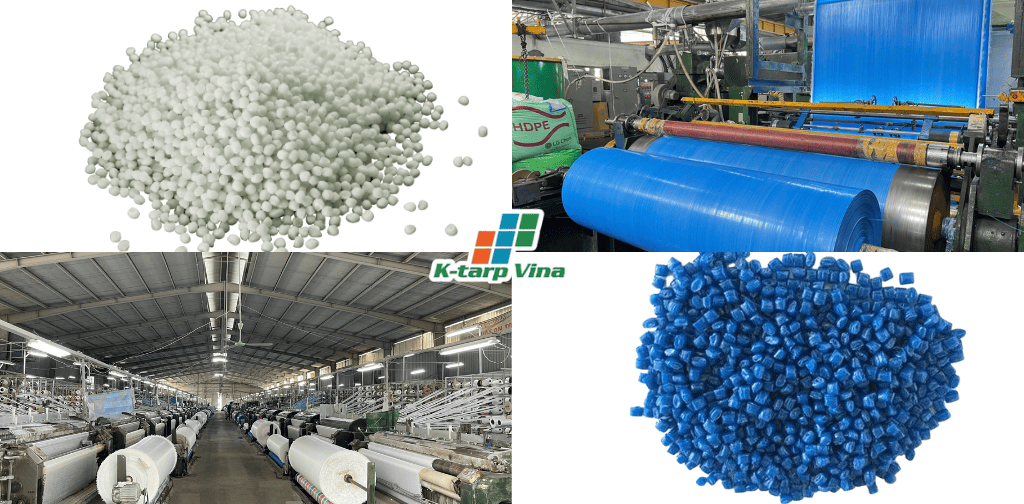
Heavy duty tarpaulin is a high-strength protective sheet manufactured from reinforced materials such as thick PE, PVC, or heavy canvas. These tarpaulins typically feature a high GSM (grams per square meter), multi-layer lamination, and tightly woven fabric cores, all of which contribute to superior durability.
Heavy duty tarpaulins are engineered to withstand extreme weather conditions, including intense sunlight, heavy rain, strong winds, and mechanical abrasion. Reinforced edges, rust-resistant metal eyelets, and heat-sealed seams ensure secure fastening and long service life. Because of these characteristics, heavy duty tarpaulin is widely used in construction projects, industrial storage, logistics, agriculture, and transportation where long-term protection is critical.
What Is Standard Tarpaulin?
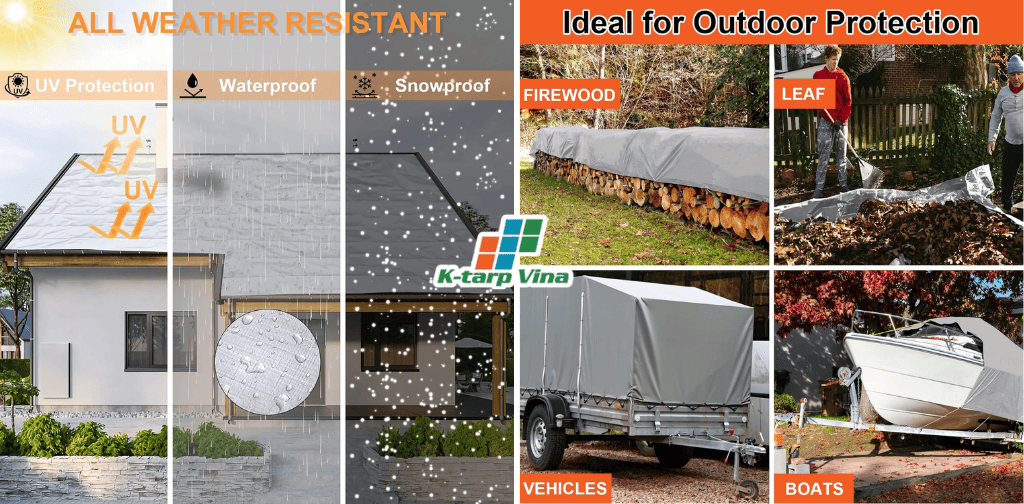
Standard tarpaulin is a lightweight or medium-weight covering material designed for general-purpose and temporary applications. It is usually made from thinner PE or fabric materials, resulting in lower GSM and reduced strength compared to heavy duty alternatives.
The key advantages of standard tarpaulin are affordability, flexibility, and ease of handling. These tarpaulins are commonly used for household covers, temporary shelters, event setups, garden protection, and short-term storage. However, due to limited thickness and lower resistance to UV and tearing, standard tarpaulins are not ideal for long-term outdoor use or heavy-duty applications.
Key Differences Between Heavy Duty Tarpaulin and Standard Tarpaulin
The table below summarizes the most important differences between heavy duty tarpaulin vs standard tarpaulin, helping users quickly identify which option best suits their needs.
| Criteria | Heavy Duty Tarpaulin | Standard Tarpaulin |
|---|---|---|
| Thickness & GSM | High GSM, thick and reinforced | Low to medium GSM |
| Strength | Excellent tear and puncture resistance | Moderate strength |
| Weather Resistance | Strong UV, rain, and wind protection | Limited protection |
| Lifespan | Long-term, reusable | Short-term use |
| Weight & Flexibility | Heavier, less flexible | Lightweight, easy to handle |
| Cost | Higher initial cost | Lower upfront cost |
| Typical Applications | Construction, industrial, logistics | Household, temporary covers |
From a performance standpoint, heavy duty tarpaulin clearly outperforms standard tarpaulin in demanding environments, while standard tarpaulin remains a practical choice for light-duty needs.
When Should You Choose Heavy Duty or Standard Tarpaulin?
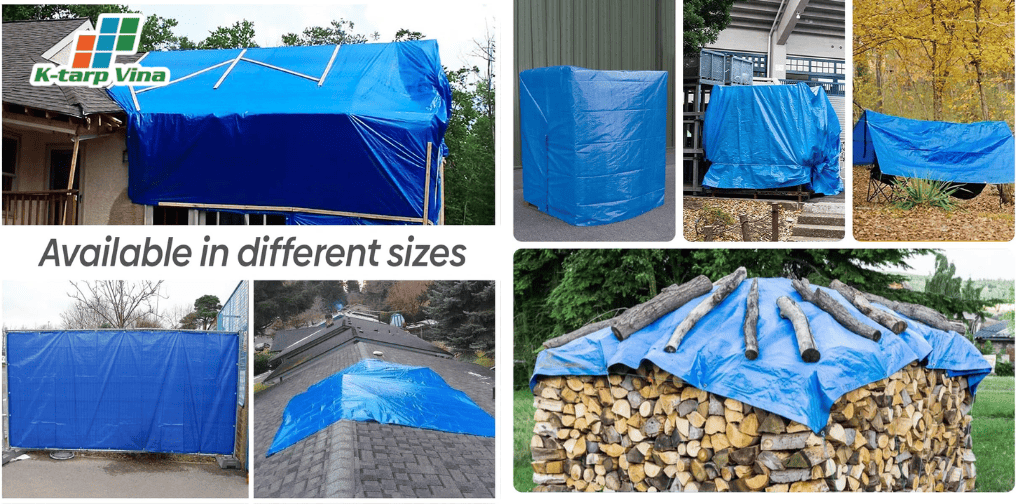
You should choose heavy duty tarpaulin if your application requires long-term durability, strong weather resistance, and high load-bearing capacity. It is the preferred option for outdoor storage, construction sites, heavy cargo transportation, and protecting valuable equipment from environmental damage.
In contrast, standard tarpaulin is suitable for short-term or low-risk applications. If the tarpaulin is used indoors, temporarily, or under mild conditions, standard tarpaulin offers a cost-effective solution without unnecessary investment in heavy-duty materials.
FAQs About Heavy Duty Tarpaulin vs Standard Tarpaulin
Is heavy duty tarpaulin waterproof?
Yes, most heavy duty tarpaulins are fully waterproof and designed to withstand heavy rain.
Which tarpaulin lasts longer?
Heavy duty tarpaulin has a significantly longer lifespan due to thicker materials and reinforced construction.
Can standard tarpaulin be used outdoors?
Standard tarpaulin can be used outdoors for short periods but is not recommended for long-term exposure.
Is heavy duty tarpaulin worth the higher cost?
For long-term and demanding applications, heavy duty tarpaulin is more cost-effective over time.
What GSM is considered heavy duty tarpaulin?
Generally, tarpaulins above 180–200 GSM are classified as heavy duty, depending on material quality.
Final Thoughts & Supplier Recommendation
When comparing heavy duty tarpaulin vs standard tarpaulin, the right choice depends on your usage conditions, expected lifespan, and budget. Selecting the appropriate tarpaulin not only ensures effective protection but also helps reduce replacement costs and operational risks over time.
If you are looking for high-quality heavy duty tarpaulin solutions, reliable manufacturing, and professional consultation, K-Tarp Vina is ready to support your needs.
K-Tarp Vina – Contact Information
📍 Address: Lot CN3+CN5+CN22, Tu Da–An Dao Industrial Cluster, Binh Phu Commune, Phu Ninh District, Phu Tho Province, Vietnam
📧 Email: sales@ktarpvina.com
🌐 Website: www.ktarpvina.com


