


Understanding the heavy duty tarpaulin specification is a critical step when selecting a protective covering for industrial, agricultural, or outdoor applications. Unlike standard tarps, heavy duty tarpaulins are engineered to withstand harsh environments, prolonged exposure to weather, and repeated mechanical stress. Factors such as material composition, fabric weight, waterproof performance, and reinforcement design directly influence how long a tarpaulin will last and how effectively it protects assets. This article provides an in-depth overview of heavy duty tarpaulin specifications to help buyers, engineers, and procurement teams make informed decisions.
What Is a Heavy Duty Tarpaulin?
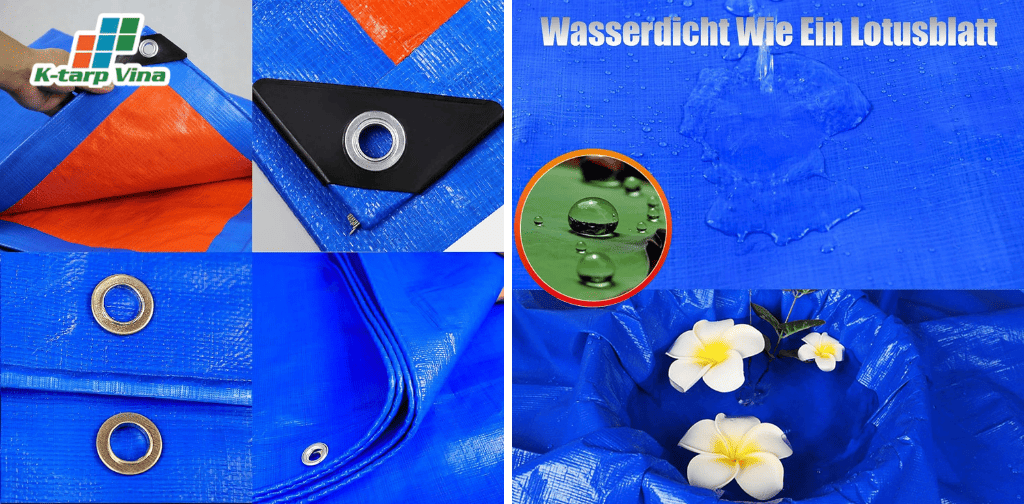
A heavy duty tarpaulin is a high-strength protective sheet designed for demanding use conditions where ordinary covers would fail. These tarps are manufactured using advanced woven fabrics coated or laminated to enhance durability, water resistance, and UV stability. Compared to light or medium-duty tarps, heavy duty versions are thicker, heavier, and reinforced to resist tearing, stretching, and abrasion.
Heavy duty tarpaulins are commonly produced from polyethylene (PE), polyvinyl chloride (PVC), or treated canvas. Each material offers different performance characteristics, but all heavy duty tarps share the same goal: long-term protection under continuous outdoor or industrial exposure.
Core Heavy Duty Tarpaulin Specifications Explained
Material Composition and Fabric Strength
Material selection is the foundation of any heavy duty tarpaulin specification. PE tarpaulins are widely used due to their balance of strength, flexibility, and cost efficiency, making them suitable for construction and general industrial coverage. PVC tarpaulins, on the other hand, are heavier and more robust, offering superior resistance to tearing, chemicals, and fire, which makes them ideal for logistics, trucking, and permanent installations.
Fabric strength is often indicated by GSM (grams per square meter), which reflects the density of the material. Heavy duty tarpaulins typically start from around 180 GSM and can exceed 500 GSM for industrial-grade applications. A higher GSM usually translates to greater tensile strength and improved resistance to mechanical stress.
Waterproof Performance and Weather Resistance
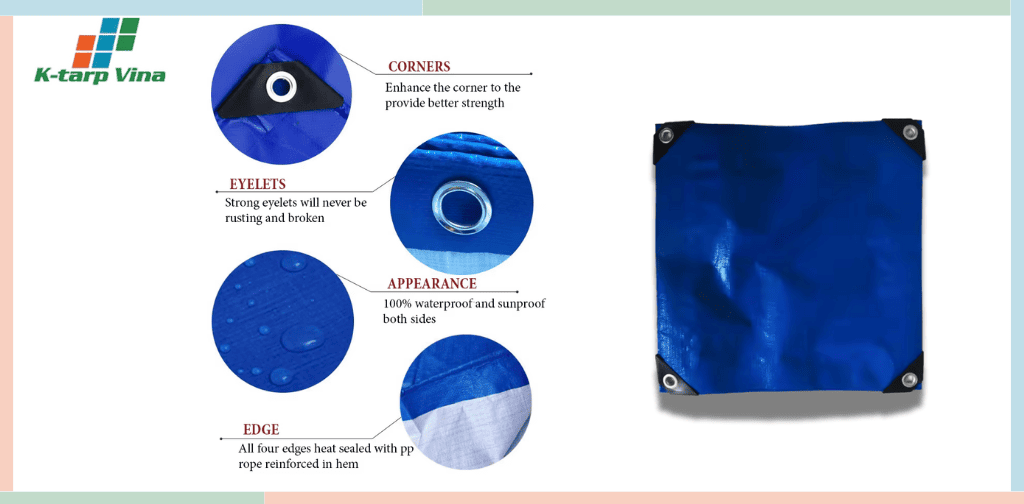
Waterproof capability is one of the most important aspects of heavy duty tarpaulin performance. High-quality tarpaulins are laminated or coated on both sides to prevent water penetration even during prolonged rainfall. In addition to waterproofing, advanced heavy duty tarpaulins are treated to resist ultraviolet radiation, reducing material degradation caused by long-term sun exposure.
Weather resistance also includes protection against wind, temperature fluctuations, and mold growth. These features are especially critical for tarpaulins used in agriculture, construction sites, and open storage yards where environmental conditions are unpredictable.
Thickness, Weight, and Dimensional Accuracy
Thickness directly impacts durability and service life. Heavy duty tarpaulins are significantly thicker than standard tarps, allowing them to maintain structural integrity under load or tension. The added weight provides stability in windy conditions while still remaining flexible enough for easy handling and installation.
Dimensional accuracy is another important specification. Industrial tarpaulins are manufactured to precise measurements to ensure consistent coverage, particularly for applications such as truck covers, machinery protection, or large-scale warehousing.
Reinforcement Structure and Edge Finishing
Reinforcement details often determine whether a heavy duty tarpaulin can be reused over time. Strong hems, reinforced corners, and evenly spaced metal grommets help distribute stress across the surface of the tarp rather than concentrating it at a single point. This structural design significantly reduces the risk of tearing during installation or prolonged use.
In industrial environments, reinforced edges are essential for securing the tarp tightly without compromising its integrity, especially when exposed to strong winds or mechanical movement.
Applications Based on Heavy Duty Tarpaulin Specification
Industrial and Construction Environments
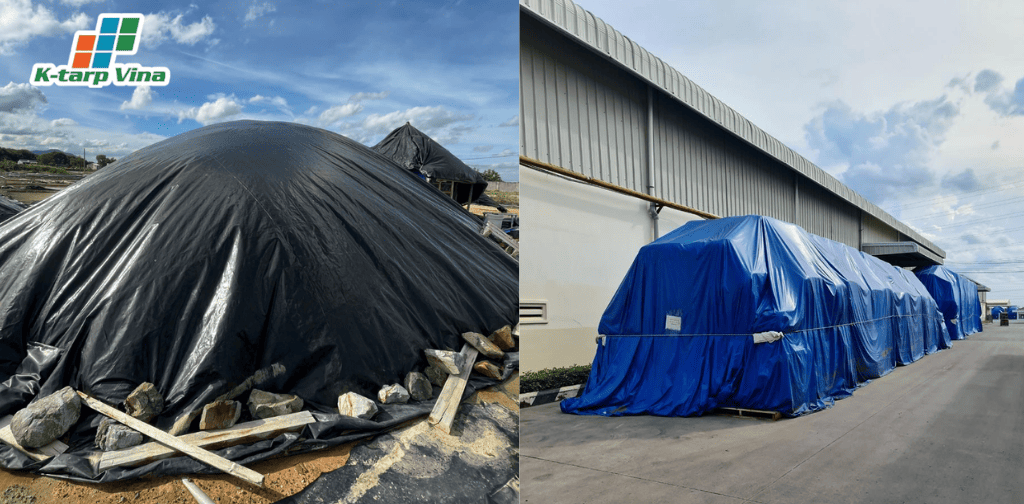
In construction and industrial settings, heavy duty tarpaulins are widely used to protect equipment, raw materials, and unfinished structures. Their high tensile strength and waterproof properties make them suitable for covering scaffolding, machinery, and building materials during long-term projects. The ability to resist dust, debris, and weather exposure ensures operational continuity even in challenging environments.
Agricultural and Farming Use
Agriculture relies heavily on tarpaulins to protect crops, feed, and equipment. Heavy duty tarpaulins provide reliable coverage for hay stacks, silage storage, and irrigation systems. Their resistance to moisture and mold is particularly important in preventing spoilage and maintaining product quality over extended storage periods.
Transportation and Logistics
In logistics and transportation, heavy duty tarpaulin specifications play a critical role in cargo safety. Truck covers, container linings, and load restraints depend on durable tarpaulins to protect goods from rain, dust, and road debris. PVC tarpaulins are especially favored in this sector due to their high tear resistance and long service life.
Outdoor, Event, and Emergency Use
Heavy duty tarpaulins are also used in outdoor events and emergency situations where rapid deployment and reliable shelter are required. Their ability to withstand harsh weather makes them suitable for temporary tents, emergency covers, and large-scale event canopies.
How to Choose the Right Heavy Duty Tarpaulin
Selecting the correct heavy duty tarpaulin requires evaluating the intended application rather than focusing solely on price. Buyers should consider the environment in which the tarp will be used, the duration of exposure, and the level of mechanical stress involved. A thicker, reinforced tarpaulin may have a higher upfront cost but often delivers better long-term value through extended durability and reduced replacement frequency.
Mistakes commonly occur when users choose tarpaulins that are too thin or lack proper reinforcement, leading to premature failure. Understanding specification details ensures that the selected product meets both functional and safety requirements.
FAQ – Heavy Duty Tarpaulin Specification
What makes a tarpaulin “heavy duty”?
A tarpaulin is classified as heavy duty based on its material density, thickness, reinforcement structure, and resistance to weather and mechanical stress.
Is GSM the most important specification?
GSM is important, but it should be evaluated alongside coating quality, UV resistance, and reinforcement design for a complete performance assessment.
Can heavy duty tarpaulins be used long-term outdoors?
Yes, when UV-treated and properly reinforced, heavy duty tarpaulins are designed for long-term outdoor use.
How long does a heavy duty tarpaulin last?
Service life depends on material quality and usage conditions, but industrial-grade tarpaulins can last several years with proper maintenance.
Conclusion & Contact Information
A well-defined heavy duty tarpaulin specification ensures optimal performance, safety, and long-term cost efficiency. By understanding material composition, thickness, waterproofing, and reinforcement features, businesses and individuals can select tarpaulins that meet demanding operational requirements across construction, agriculture, logistics, and outdoor use.
K-Tarp Vina – Contact Information
📍 Address: Lot CN3+CN5+CN22, Tu Da–An Dao Industrial Cluster, Binh Phu Commune, Phu Ninh District, Phu Tho Province, Vietnam
📧 Email: sales@ktarpvina.com
🌐 Website: www.ktarpvina.com


